Why your eyes feels more tired in winter (& what to do about it)
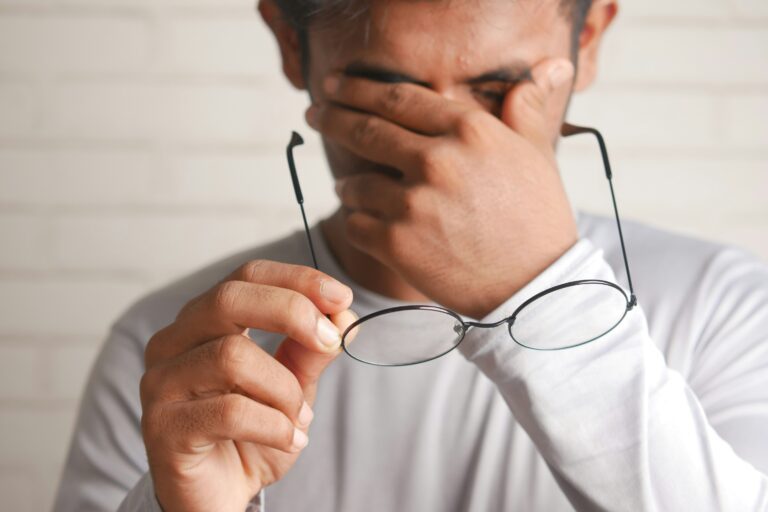
Many people notice that their eyes feel more tired in winter. Screens seem harder to focus on, headaches become more frequent and vision feels less sharp by the end of the day.
At Whitby & Co., this is one of the most common concerns we hear at this time of year. Winter places unique demands on the eyes and even small changes in vision can become more noticeable when light levels drop and screen time increases.
It’s not just anecdotal. Research shows that digital eye strain affects a significant proportion of adults who regularly use screens, highlighting how common visual discomfort has become in modern working life.
Why winter makes eye strain more noticeable
Several factors contribute to eye fatigue during the colder months. Reduced natural daylight means our eyes rely more heavily on artificial lighting, while colder weather often leads to more time spent indoors on digital devices.
For many people, working days now involve prolonged periods of close-up focus. Studies suggest that adults can spend around eight hours a day on screens, sometimes even more. When combined with low light levels and dry indoor air from heating, the eyes are forced to work harder to maintain clarity and comfort.
In practice, this often shows up as subtle but persistent symptoms.
Even a slight change in prescription can affect how comfortably you see screens or small text.
Common signs include:
– Blurred or fluctuating vision
– Difficulty focusing on screens
– Headaches after prolonged screen use
– Needing to squint or lean forward
– Eyes feeling dry, irritated or heavy
For adults over 40, presbyopia (the natural age-related change in near vision) can also make winter screen work more challenging. Many people assume these symptoms are simply part of getting older or working long hours, but they’re often signs that the eyes are not fully supported.
Interestingly, surveys suggest that many people delay eye examinations, meaning they may be coping with avoidable visual strain for longer than necessary.
How an eye examination can help
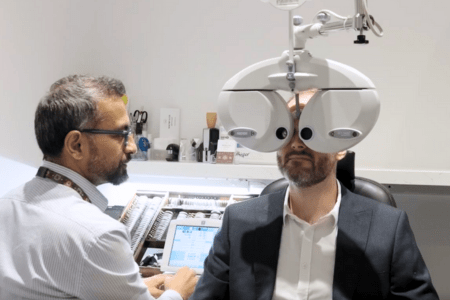
An eye examination isn’t just about updating glasses. It can help identify:
– Whether your prescription has changed
– Whether you would benefit from lenses designed specifically for screen use
– Whether glare, lighting or working distance is contributing to discomfort
– Early signs of underlying eye conditions
Many patients are surprised by how much difference a simple adjustment can make. For some, the improvement in comfort is immediate; for others, it gradually transforms how they feel at the end of a working day.
Alongside regular eye examinations, a few small changes can help support visual comfort such as:
– Positioning screens to reduce glare
– Taking short visual breaks during the day
– Balancing lighting so it is neither too harsh nor too dim
– Considering lenses designed for digital use
These adjustments are not dramatic, but can significantly reduce the strain placed on the eyes during long periods of close work.
Book a check-in for your vision
If your eyes feel consistently tired or your vision feels less clear than usual, it’s worth having an eye examination.
At Whitby & Co., our optometrists provide thorough, personalised eye care to help you see clearly and comfortably, whatever the season.